
Pregnancy After Loss: When the Next Pregnancy Brings Fear Instead of Joy

Everyone told you the day you saw two lines again would be the happiest of your life. They were so sure about it.
And then it happened. The test. The lines. The thing you had wanted and feared in almost equal measure. And what flooded in wasn't joy — it was something closer to terror. A held breath. A bracing. A quiet voice that said don't get attached, don't get excited, don't believe it yet, before you'd even finished reading the result.
If that's where you are — pregnant again after a loss, or after a long and bruising road of infertility, and feeling far more fear than celebration — I want to say this clearly, before anything else: you are not ungrateful. You are not broken. And there is nothing wrong with the way you're carrying this.
You are doing one of the hardest things a body and a heart can do. You are hoping again, in a body that has already learned that hope can be taken away.
Why this pregnancy doesn't feel like the story everyone expects
There's a script for pregnancy. You know the one. Two lines, happy tears, a cute announcement, a glow. Everyone around you reaches for it instinctively, because for many people it's true, and because it's the only version they've been handed.
But that script was written for someone who hasn't stood where you've stood. Someone who hasn't packed away a nursery, or sat through a silent ultrasound, or counted years instead of weeks. For you, pregnancy is no longer an innocent thing. You know, in your body, that a positive test is not a guarantee. You learned it the hard way.
So the gap between how you're "supposed" to feel and how you actually feel becomes its own quiet wound. Everyone's celebrating, and you're terrified, and on top of the fear comes the guilt — what's wrong with me that I can't just be happy? Nothing is wrong with you. You're simply feeling the truth that the script leaves out: that for people who've lost, joy and dread arrive holding hands. That's not a malfunction. That's wisdom the painful way.
The part where you won't let yourself bond — and why that makes sense
One of the most common and most misunderstood parts of pregnancy after loss is this: you find yourself holding the pregnancy at arm's length. Not buying anything. Not naming anything. Not picturing a nursery, a face, a future. Not saying the words "when the baby comes," only "if."
People around you might read this as negativity, or pessimism, or not trying to think positively. It isn't any of those. It's protection. Some part of you has done the math — if I don't fully let myself love this, it will hurt less if I lose it too — and it's keeping a careful distance from your own hope as a way of surviving the not-knowing.
This guarded, tentative way of being pregnant is incredibly common after loss, and it deserves compassion, not correction. You are not failing to bond. You are bonding the only way that feels survivable right now — slowly, with one hand on the exit. Over time, often with support, most people find their way toward letting the hope in a little more. But you don't have to force it on anyone's timeline, least of all the timeline of people who've never had to protect themselves this way.
The calendar nobody else can see
There's a hypervigilance that comes with this kind of pregnancy, and it has a structure to it — a private calendar of fear that the people around you can't see.
The week you lost the last one. The anatomy scan. The point of "viability." The appointment after a stretch of not feeling movement. For people who've experienced infertility, there's the whole accumulated muscle memory of monitoring — the tracking, the testing, the bracing for bad news that became second nature over months or years.
So between appointments, you check. You monitor symptoms. You count kicks, then panic when you can't feel them, then feel them and panic that they've slowed. You read the worst-case stories at 2 a.m. Every twinge becomes a question. Every reassuring scan buys you only a few days of breathing room before the fear seeps back in.
This is exhausting, and it's not a sign that you're "anxious by nature" or doing pregnancy wrong. It's a nervous system that learned, through real loss, that vigilance is safer than ease. The work isn't to shame yourself out of it. It's to find ways to give your body moments of genuine rest inside a stretch of time it has every reason to find frightening.
Grief and hope, living in the same body
Here is the thing almost no one will give you explicit permission to feel, so let me: you are allowed to want this baby and still grieve the one who isn't here. Both are true at once. They do not cancel each other out.
A new pregnancy does not replace a loss. It doesn't "fix" it or close it. The baby you lost is still yours, still real, still grieved — and that grief can sit right alongside the tender, frightened hope you feel for the pregnancy now. If you find yourself crying on a day you thought you'd be happy, or feeling disloyal to the baby you lost for daring to hope again, that's not a contradiction to resolve. It's two true things being carried in one body. You're allowed to hold both. Most people in your shoes are holding both, even when no one can see it.
What the long road of infertility leaves behind
If you arrived at this pregnancy through infertility, there's an extra layer worth naming.
Months or years of treatments, tracking, hoping, and crushing disappointment do something to a person. They can leave you feeling betrayed by your own body, as if it failed at something it was "supposed" to do. They can turn hope itself into something dangerous — because every cycle taught you that hope gets punished. So even now, even pregnant, the old reflex fires: don't believe it, don't relax, you know how this goes.
That reflex was earned. It protected you through a brutal stretch. And it doesn't switch off just because the test is finally positive. Part of the work after infertility is grieving everything the road cost you — the time, the money, the sense of ease, the version of this you thought you'd get — even as you step into the thing you fought so hard for. You're allowed to mourn the journey while you're living the outcome.
When the fear doesn't end at the birth
There's a quiet myth that all of this resolves the moment you're holding a healthy baby. That the "rainbow baby" arrives and the storm clears.
For many people, it doesn't — at least not right away. The vigilance you built over a loss or an infertility journey often follows you into early parenthood. The checking that the baby is still breathing. The difficulty trusting that this one gets to stay. The grief that resurfaces unexpectedly, sometimes most sharply in the moments that are supposed to be purely happy. This is common, and it's worth knowing about ahead of time, so that if it happens you don't add I should be over this by now to everything else you're carrying.
You don't have to white-knuckle through that season alone, either. Support during pregnancy after loss is also support for whatever comes after it.
What actually helps (and what doesn't)
Let's name the things that don't help, because you've probably heard all of them: just relax. Don't stress, it's not good for the baby. Everything happens for a reason. At least you know you can get pregnant. Just think positive. These land like small cuts, even from people who love you. They ask you to abandon your real feelings in exchange for a comfort that was never yours to take.
What helps is closer to the opposite. A space where the fear is allowed to be exactly as big as it is, without anyone rushing to talk you out of it. Permission to bond at your own pace, with no pressure to perform a joy you don't feel. Tools for the milestone spikes and the 2 a.m. spirals — ways to ride the waves of anxiety without drowning in them. Room to grieve the baby you lost and the road that brought you here, even while you hope. And support for your relationship, since partners often grieve and fear differently, and the distance that creates can be its own quiet ache.
This is exactly the kind of work that therapy is built to hold — not to make the fear disappear, but to make it something you no longer have to carry alone or in secret.
A gentle place to land
If any of this felt like being seen — if you've been moving through this pregnancy bracing, hiding the fear, performing a calm you don't feel — you don't have to keep doing it on your own.
Heather Barker supports people through exactly this terrain at ėVölva Wellness: pregnancy after loss and after infertility, the grief that doesn't disappear when hope returns, the anxiety that lives in the body's private calendar, and the tender work of letting yourself believe in something again. The space here is unhurried and judgment-free. Your fear is welcome. Your grief is welcome. Your cautious, half-hidden hope is welcome too.
You're allowed to want this and be terrified of it. You're allowed to grieve and to hope in the same breath. And you don't have to hold all of it alone.
When you're ready, you're welcome here.
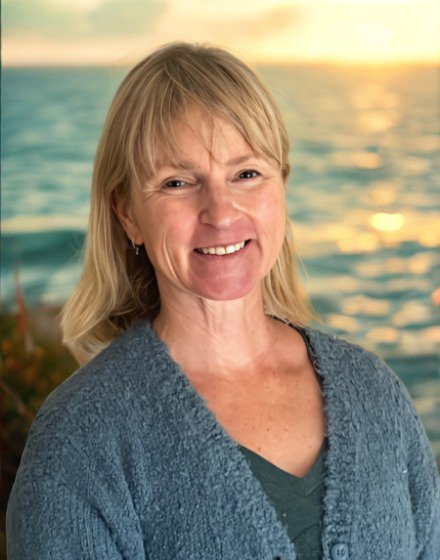
Heather Barker
supports clients across Canada with sex and intimacy, perinatal and reproductive mental health, hormonal transitions, and the deeper relational work beneath them.
Specializing in women’s hormonal and sexual health.
Heather’s counselling services are mainly covered under Psychotherapy when you select Registered Psychotherapist with your insurance.
