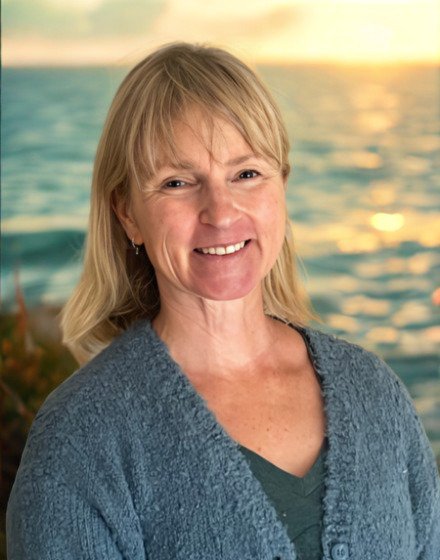
Meet Heather Barker, Sex + Reproductive Therapist
Our newest therapist — and the person you can finally say the unsayable to.
Most people who find their way to Heather have been holding something for a long time — some thread of their inner life around sex, desire, or intimacy that has never quite felt safe to say out loud. Not to a partner. Not to a friend. Sometimes not even to themselves.
We're thrilled to welcome Heather to the ėVölva team. She specializes in sex and intimacy, and she's exactly the kind of therapist you want sitting across from you when the thing you need to talk about is the thing you've been most afraid to name.
A therapist for the things nobody says out loud
Heather Barker, B.Sc, MACP, is a Sex Therapist and Mindfulness Practitioner with a certification in neurodivergence. People sometimes call her a taboo therapist, and she'll happily take the title. It just means there's no part of your inner life that's off the table with her — no desire too strange, no question too embarrassing, no part of your story too tangled or too tender to bring into the room.
So much of what we carry around sex and intimacy never gets spoken because we've quietly decided it's not allowed. The fantasy we're ashamed of. The wanting that feels like too much, or the wanting that's gone missing entirely. The version of ourselves we packed away somewhere along the line because it didn't fit the script. Heather's whole practice is built around the radical idea that these things deserve daylight — and that you deserve to be met with care when you finally set them down.
What anchors her work
Underneath everything Heather does is a single, steady belief: shame loses its grip the moment something gets spoken in a room where it's met with care instead of a flinch.
That's the quiet engine of her work. Not techniques, not homework, not a clever reframe — though all of that has its place. The real medicine is being seen. Being able to say the unspeakable thing and watch it land in front of someone who doesn't recoil, doesn't judge, doesn't rush to fix you. For a lot of people, that experience alone is the beginning of something loosening.
Maybe you've noticed you can't quite move through life with any fluidity. Maybe you look around at the people closest to you and still feel alone in your own thoughts and feelings. Maybe somewhere along the way you gave up on who you are, or decided some part of you wasn't allowed. Heather's answer to all of that is the same: it's okay. Breathe. We can work with this.
How Heather Works with Clients
Heather describes her approach as deeply relational and, honestly, nurturing by design. She doesn't believe in handing everyone the same map and sending them off to follow it. We all see the world through a different lens, so instead she builds something with you — a mutual map, drawn together, that fits the person you actually are rather than the person a textbook assumes you to be.
That map gets built with an ebb and flow, moving through the coulds and shoulds, the feelings and the thoughts, at a pace that belongs to you. She draws from a genuinely integrated toolkit:
Cognitive Behavioural Therapy (CBT) — for the thoughts and patterns that keep you stuck in loops
Dialectical Behaviour Therapy (DBT) — for holding big, contradictory feelings without being swept away by them
Strength-Based Theory — because you're not a problem to be fixed; you already have more to work with than you know
Internal Family Systems (IFS) — for getting to know the different parts of you, including the ones you've exiled
Mindfulness and somatic practice — for coming back into a body that may have started to feel like unfamiliar territory
Who Heather is for
Heather works with individuals and with couples — and her territory spans the full, complicated arc of intimacy, the body, and the reproductive life. She's the right fit if any of this feels close to home:
Sex and intimacy
Sex and intimacy concerns, including when sex has started to feel like a task instead of a connection
Pain during sex
Body image and a shifting sense of your sexual self
Shame around desire, identity, or simply wanting
Underlying resentment in a relationship
Rebuilding closeness after conflict or broken trust
Hormones and reproductive health
Menopause and perimenopause
PCOS, thyroid concerns, PMDD, and the effects of hormonal birth control on libido
Pregnancy, postpartum, and loss
Prenatal and postpartum depression and anxiety
Fear of pregnancy and birth
Pregnancy after loss or infertility
Abortion and pregnancy loss support
If you're carrying something that isn't on this list but lives in the same neighbourhood — the tender, taboo, hard-to-say territory — that almost certainly belongs with Heather too.